So what's the advantage of those type of dishes?
The Torodial 90cm and 120cm have dual reflectors as detailed by
@Ferret. They are able to perform across a wide arc, roughly 25 degrees left and right
of your chosen centre point. They are big and look odd. As a fixed dish you would have to install several lnbs. One lnb per satellite you want to receive,
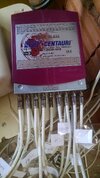
but whilst you would have good signal at each satellite, you would have quite a complex cable and disecq switch set up from the dish and then into your house.
The motorised option is the most preferred as it has the least physical parts and optimised signal strength every time the motor moves to a new satellite. If there
is a downside to this option it is that the motor can fail over time (a few years). This happened to me twice, so I personally prefer a fixed dish setup. To each his
own.
As
@ferret said, the fixed dish setup I described means that the signal is the strongest at the centre, then reduces as each lnb is positioned further and further away
from the centre. The downside is that you need to start with a larger dish size than you would if you had a motorised option. However, the main upside I have found
in a multi-lnb fixed dish set up is that the dedicated lnbs and cables allows you to watch one satellite and channels, whilst recording other satellites and channels
simultaneously. You can't do that with a motorised setup as you are limited to watching whatever the motor is pointing to.
Assess all the options and go with what suits you. I am not saying one is better than the other, just discussing the pros and cons and features of each option.
Good luck.